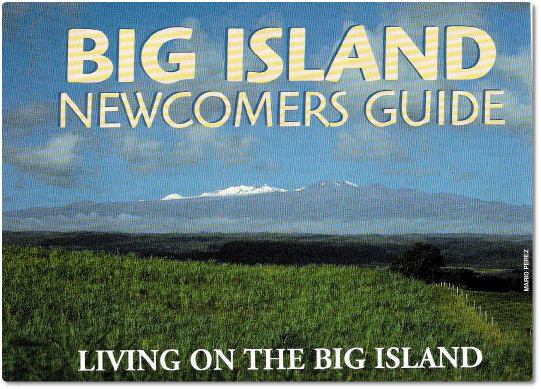
The Island of Hawai'i is the largest, most diverse and youngest of the Hawaiian Islands. There are only 150,000 people spread out over 4,000 square miles so there are great open spaces between the settled areas.
The nickname "Big Island" is used to differentiate the Island of Hawai'i from the state of Hawai'i. The island is also called the "Orchid Island" because of its profuse tropical flower industry, and the "Volcano Island" because its active volcanoes ensure that this island, the youngest in the Hawaiian chain, continues to grow.
On the Big Island you will find a primarily rural lifestyle with many of the traditions of old Hawai'i still very much in evidence. This island was the first of the islands discovered by the migrating Polynesians, and is the birthplace of Kamehameha I, who united all the islands into a single kingdom. Kealakekua Bay is where Captain James Cook died, and the place where the first missionaries came ashore in 1819.
Newcomers to the Big Island discover that its residents respect personal contact and celebrate a casual, slow-paced approach to life. Hawai'i is a land of many different cultures, traditions and values that make up the 'island style' of living treasured by those who reside here. "Live Aloha" is more than a nice bumper sticker to put on your car. For most of the Big Island's people it is a way of life.
The climate is one of the island's biggest assets. In West Hawai'i, you can be near the water with the balmy trade winds or up mauKa (up the mountain) with the cooler air. The surrounding Pacific Ocean keeps the air moist all the time.
North and South Kona and North and South Kohala are the districts that make up West Hawai'i, the sunny and dry leeward side of the Big Island. The area has some of the world's most exclusive resorts, many historic sites, incredible marlin fishing, unique Kona coffee, and an extremely diverse and talented population.
Waimea, at 3,500 feet, is the uplands portion of South Kohala and the heart of cowboy country. It is home to Parker Ranch and many fine residential neighborhoods, private schools, and excellent restaurants. Among the northernmost communities on the island such as Hawi and Kapa'au are small retail, fine arts, and craft shops. The Kohala Coast is the luxury resort destination on the island. The master-planned Waikoloa, Mauna Lani and Mauna Kea Resorts, as well as Hualalai Resort, which is closer to Kailua-Kona, are renown for their world-class accommodations, service and amenities.
Kailua-Kona, is the second most populous area on the Big Island and offers a collection of smaller hotels, a major retail and restaurant core, and the Kailua Pier, a center for boating and fishing and other water sports. Further south is Keauhou with its resort neighborhoods, hotels, and shopping.
The smaller South Kona towns of Holualoa, Honalo, Kainaliu, Kealakekua, and Captain Cook offer opportunities for traditional local living in rural, agricultural based areas that are historically important to West Hawai'i. The majority of commercial activity takes place in Kailua now, but these small mauka towns are the heart of the Kona coffee industry.
The economy of the Big Island is centered in four areas: the visitor industry, retail and services, agriculture, and construction. Construction has been very strong for the last few years, in part due to the number of second home investors that are attracted by the Big Island's quality of life.
The agriculture industry is growing and diversifying to fill the needs of the resorts and restaurants as they use more and more locally grown goods. The visitor industry attracts an educated and culturally interested visitor and this has led to more investment in cultural and educational activities.
The Big Island's scientific endeavors center around astronomy, volcanology, and marine sciences. The international University of Hawai'i Institute for Astronomy atop Mauna Kea regularly makes important discoveries about the stars and planets that make up our universe. The Volcano Observatory studies the eruptions of volcanoes world wide from the rim of Kllauea Volcano, home to the world's longest lasting eruption. The Natural Energy Laboratory of Hawai'i Authority and Hawaiian Ocean Science Technology Park in Kona use the world's only deep-sea water pipe to attract international companies and encourages them to make use of the resource.
Its size and diversity make living on the Big Island hardly like living on an island at all. It is a micro cosm of culture, climate, geography, peoples, and economies that is extraordinary. Come prepared to enjoy and stay, because that is what most do.